Subdomain Finder
Discover the names behind a domain through the public certificate logs, without sending it a single packet.
About Certificate Transparency
Since 2018, every certificate a browser trusts must be published to public, append-only Certificate Transparency logs, and the names it covers are published with it. Searching those logs lists the subdomains a domain has certified over the years without sending a single packet to the domain itself: no port scan, no dictionary of guessed names, nothing the target can see, block or log.
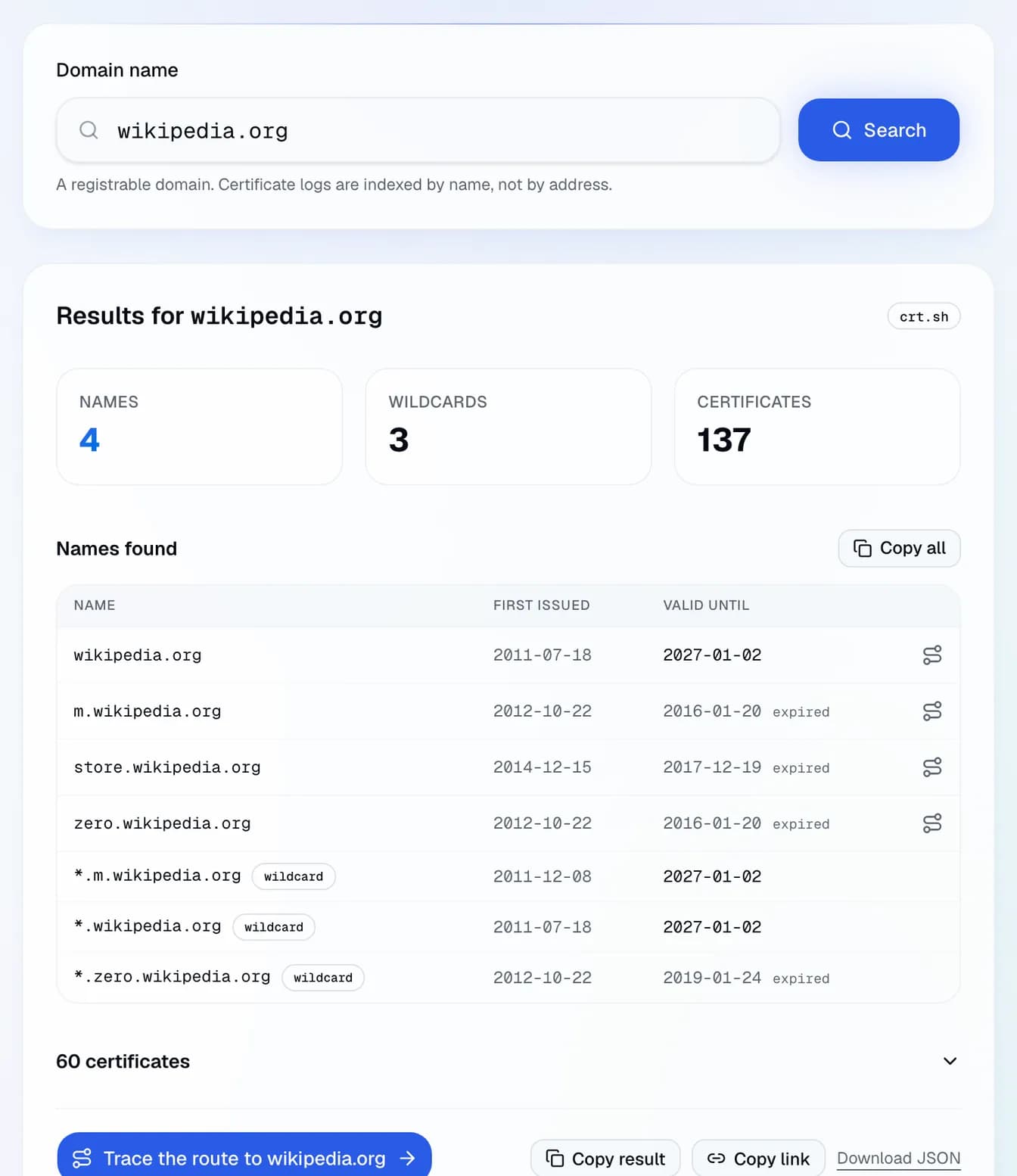
Read the list as a history, not as an inventory. A name appears because a certificate was issued for it, which proves it existed on the day of issue, not that it resolves today. Wildcards are counted separately for the same reason: a wildcard is a pattern, and it hides exactly what it is meant to hide. The dates carry the real information. A name whose newest certificate expired two years ago is probably a decommissioned service, while one renewed last month is live. Staging, preprod and admin hosts are the usual find, and they are usually the ones nobody meant to publish.
Frequently asked questions
Does this scan my domain?
A name is listed but does not resolve. Why?
Can I keep a subdomain out of these logs?
Why are two sources shown?
Related guides
Related tools
Go further
Network glossary: Reverse DNS, Anycast