Check if an IP address is listed on blacklists, reported for abuse, or associated with malicious activity.
About IP reputation
This check asks the major blocklists and abuse databases what they know about an address. It is what to run when your mail stops being delivered, when a provider blocks you, or before you trust traffic coming from an address you do not recognise.
Example
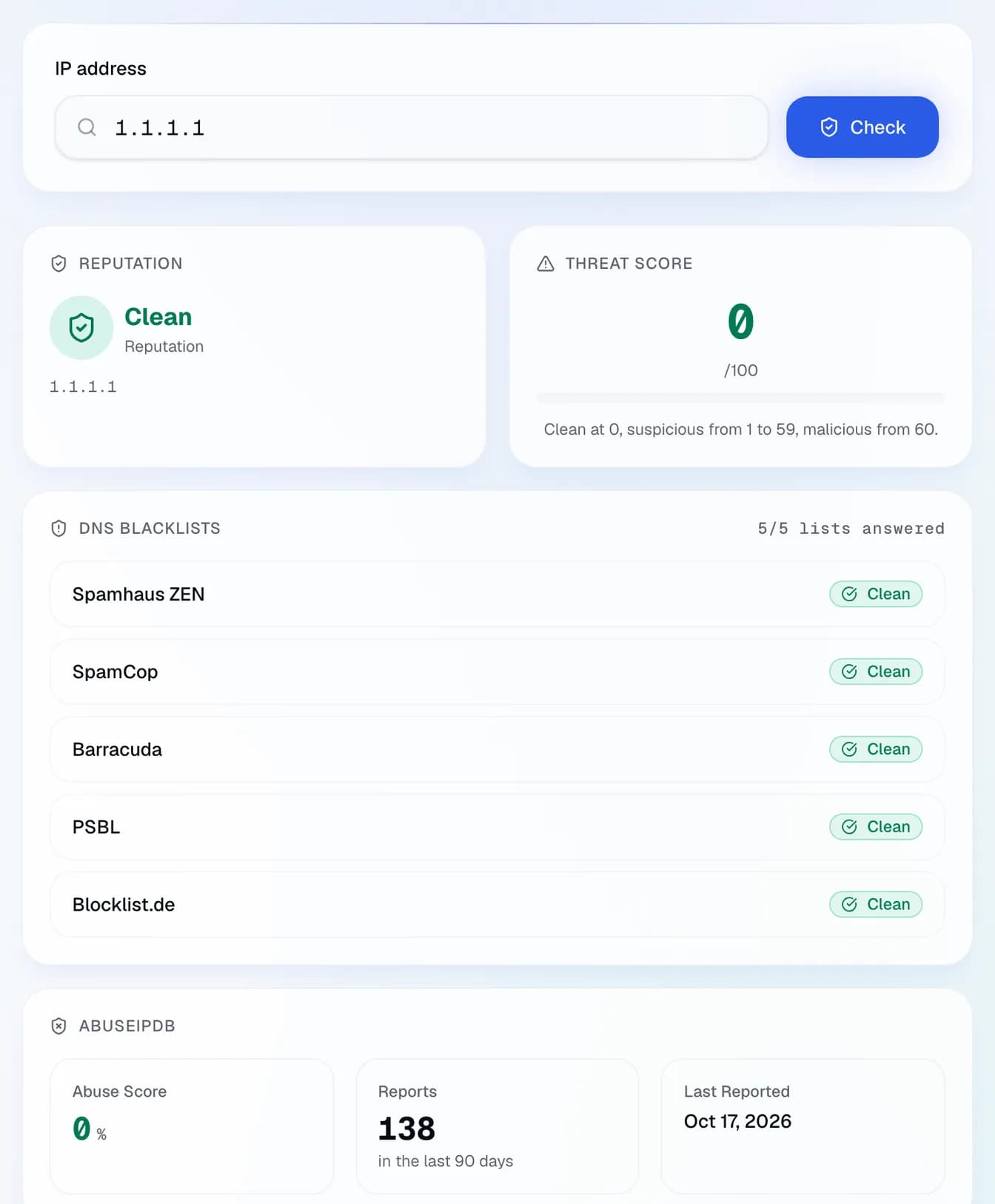
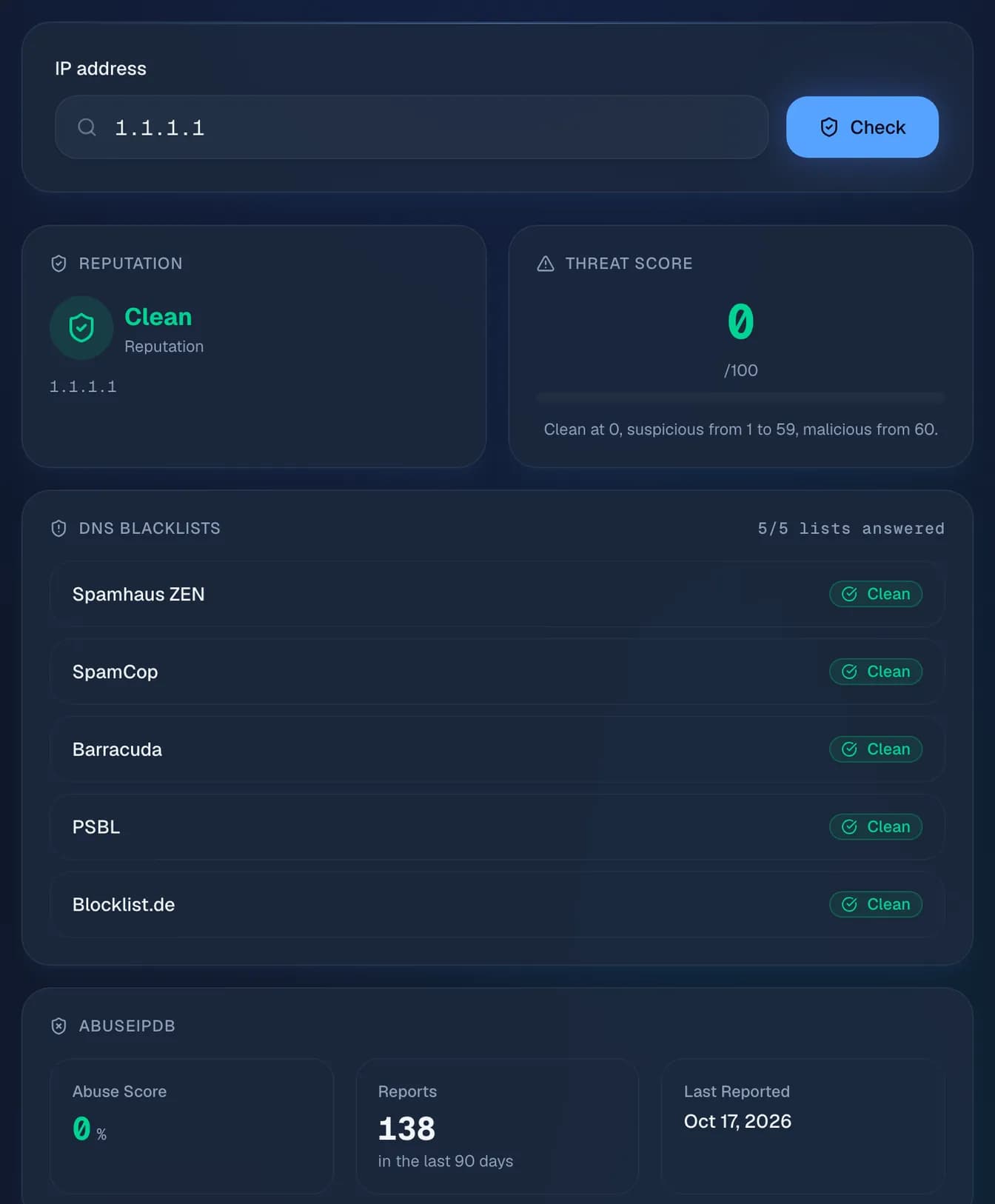
Example result: the reputation of 1.1.1.1 (Cloudflare): clean on the five DNS blocklists, threat score 0, with the AbuseIPDB reports of the last 90 days.
A single listing is not a verdict. Some lists are aggressive and catch entire ranges; others only list addresses with recent, confirmed abuse. What matters is the pattern: several independent lists agreeing, recent reports rather than years-old ones, and whether the listing concerns your specific address or the whole block your provider owns. Each list publishes its own delisting procedure, and going through it is usually the fastest route back.
Frequently asked questions
My server is listed and I have sent nothing. How?
Addresses get recycled. If the previous holder sent spam, the reputation follows the address, not the owner. Request delisting and state that the allocation changed hands.
How long does delisting take?
From a few hours to several days, depending on the list. Some expire automatically once abuse stops; others require an explicit request and will relist immediately if the behaviour recurs.
Does one listing block my mail?
It depends on the receiving provider. Large ones weigh several signals, so one minor list rarely blocks on its own, but combined with a new domain and no SPF or DKIM, it becomes decisive.
How do I keep a clean reputation?
Authenticate your mail (SPF, DKIM, DMARC), keep your sending volume steady, honour unsubscribes immediately, and monitor bounces. Reputation is built slowly and lost in one bad campaign.