Analyze any website's HTTP response, SSL certificate, redirect chain, and response headers.
About HTTP and SSL checks
This check performs a real HTTP request and reports what the server actually returned: status code, response headers, the full redirect chain, and the TLS certificate presented along the way. It is the quickest way to see a site the way a browser or a crawler sees it, from outside your own network.
Example
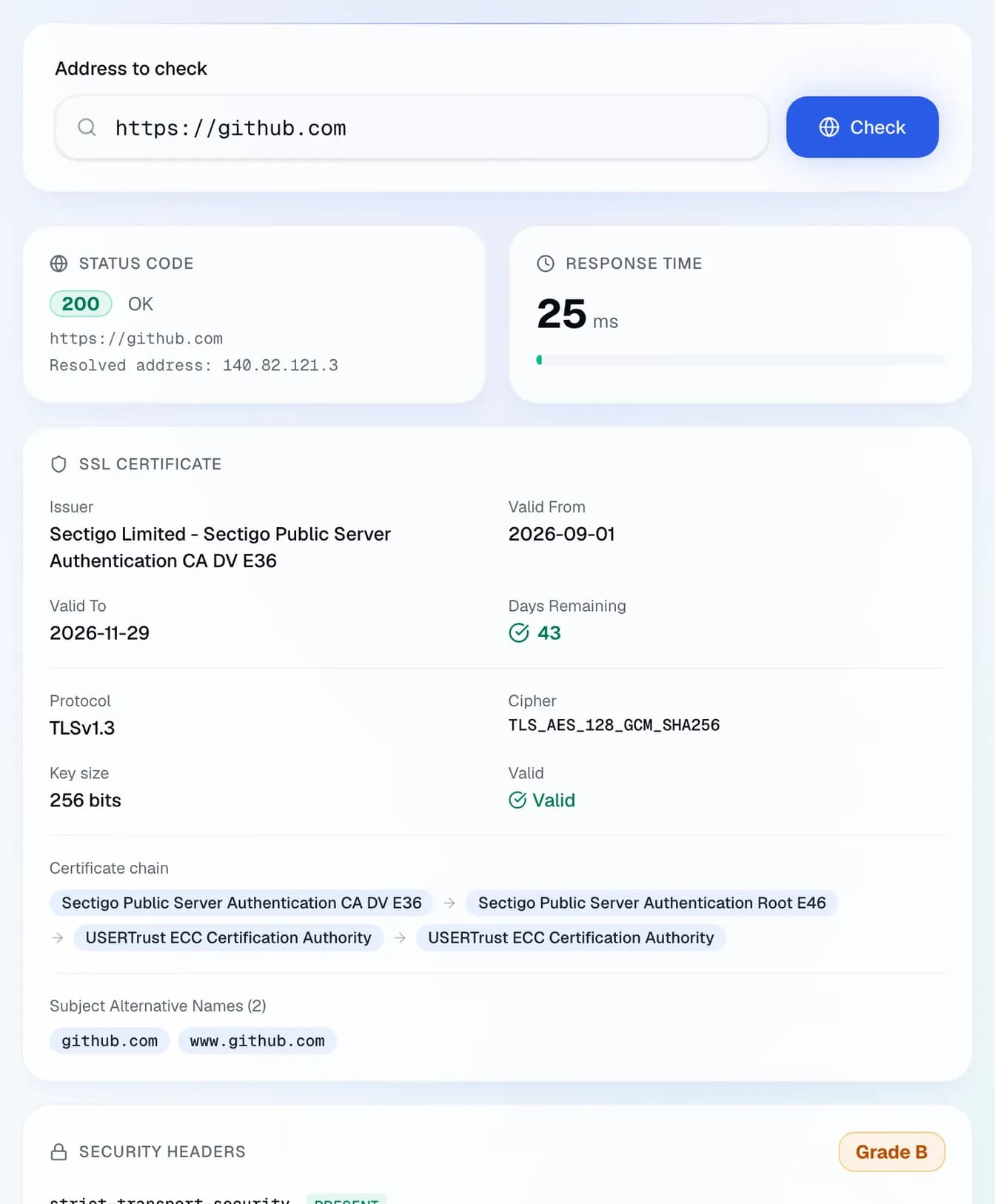
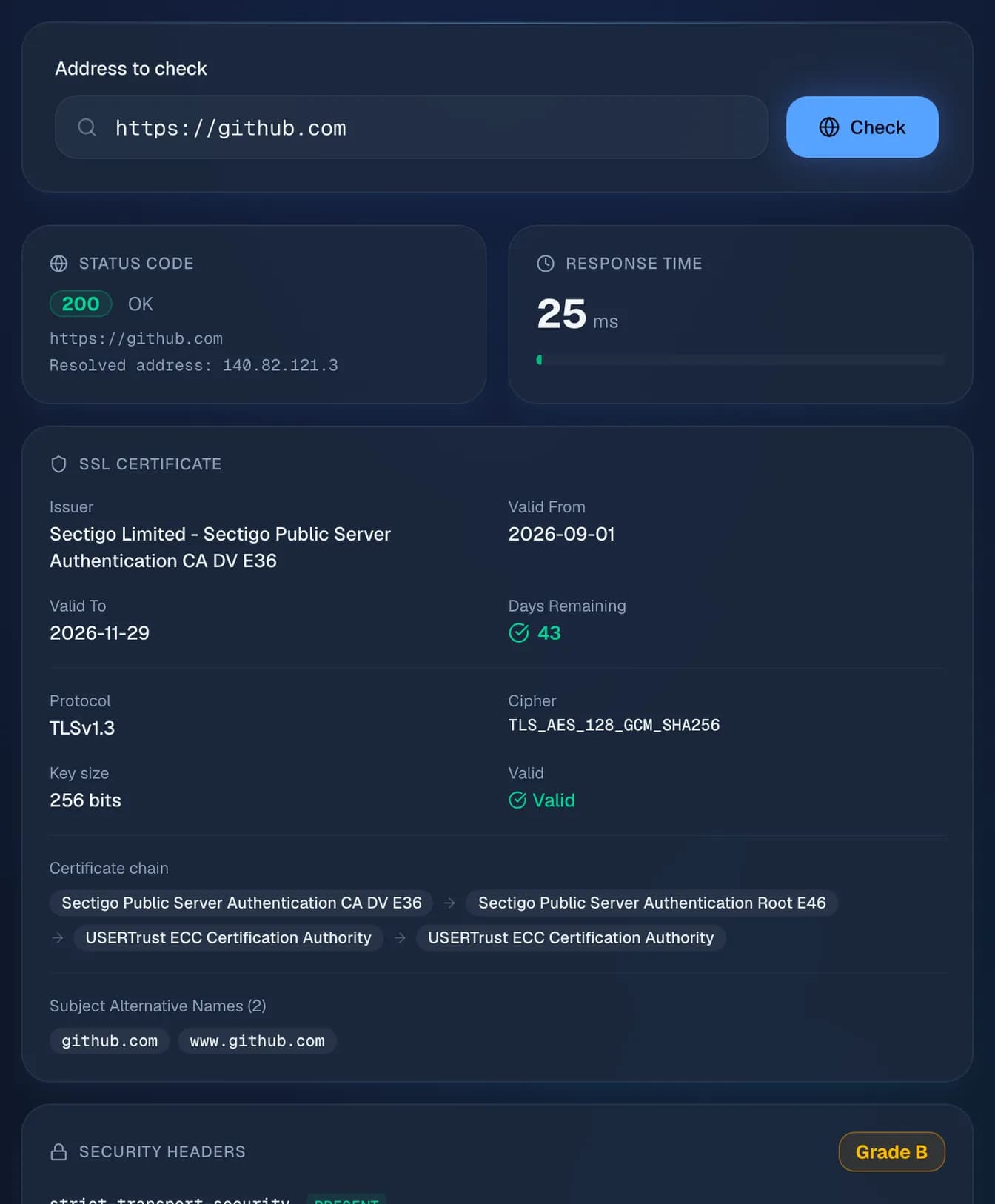
Example result: the check of https://github.com: status 200, response time, TLS certificate and its chain, and a B grade for the security headers.
Follow the redirect chain first: a loop or a hop through plain HTTP is a common cause of both broken pages and lost search rankings. Then check the certificate's remaining validity: expiry is the single most common cause of a site going dark overnight, and it is entirely preventable. Response headers reveal the server, the caching policy and whether security headers such as HSTS are actually being sent.
Frequently asked questions
My certificate is valid but browsers complain. Why?
Usually an incomplete chain: the server sends its own certificate but not the intermediate one. Some clients hold the missing link in cache and accept it, others do not, which is why it works for you and not for a visitor.
What does a 301 versus a 302 change?
A 301 is permanent and transfers ranking signals to the target; a 302 is temporary and does not. Using 302 for a permanent move is a common and costly mistake.
How early should I renew a certificate?
Automate it and renew at 30 days remaining. That leaves room for a failed renewal to be noticed and fixed before anything breaks.
Why is the response time different from my browser?
This measures one request from our server. A browser opens many connections, runs scripts and renders: the network time is only a fraction of what a user perceives.